The Structural Imbalance Hindering Long-Term Modernization
Across the Mediterranean, many marinas are struggling to undertake the large-scale investments needed to meet the sector’s growing demands for sustainability, digitalization, and modernization. The issue is not a lack of willingness or financial capacity — but rather the short duration of concession periods, which often makes it impossible to amortize long-term improvements such as energy infrastructure upgrades, digital systems, or new sustainability facilities.
As a result, some operators find themselves postponing or scaling down essential projects, even when these would clearly enhance competitiveness and environmental performance.
A Broken Model: Short-Term Thinking in a Long-Term Industry
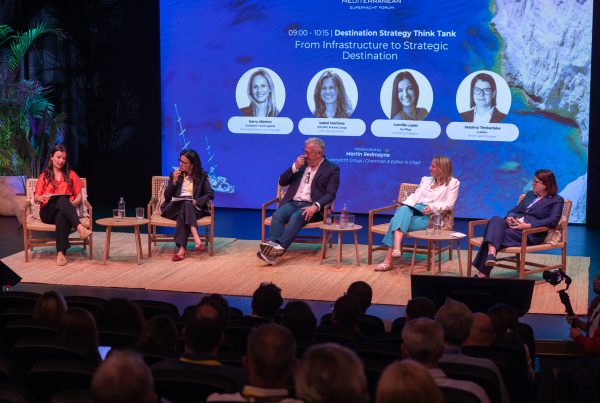
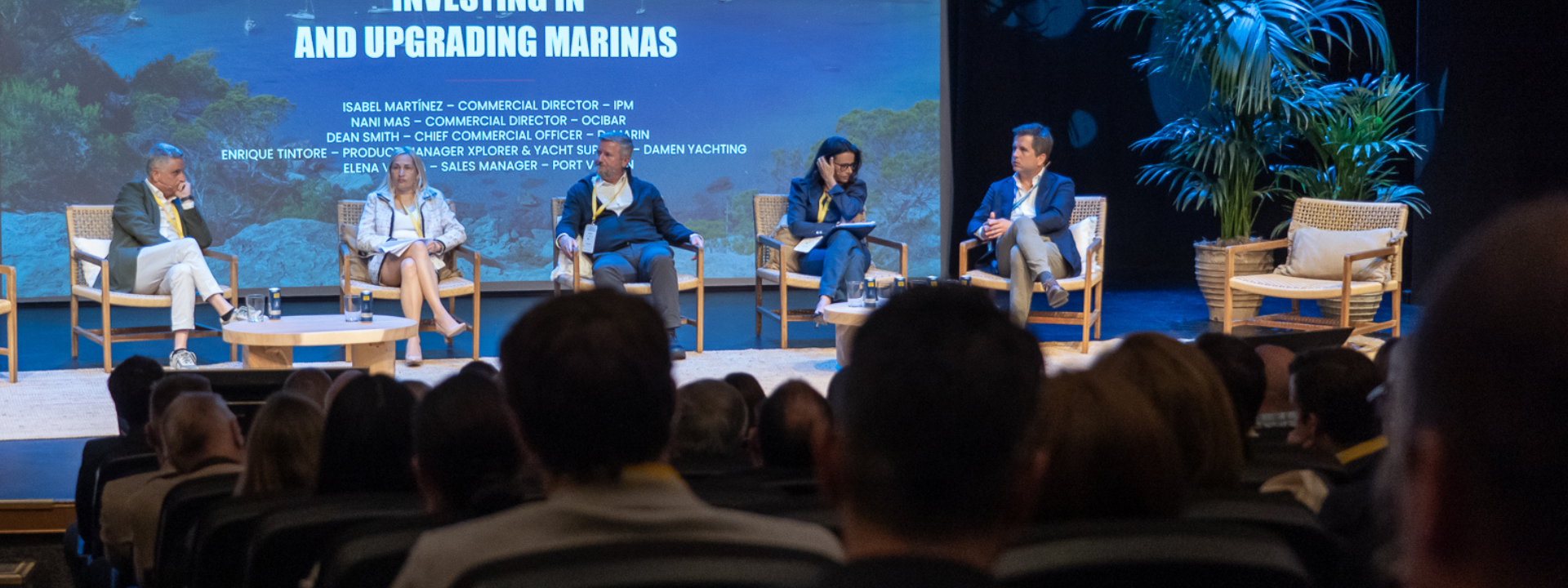
The Think Tank “Investing in and Upgrading Marinas” held during The Balearic Superyacht Forum 2025 revealed a shared frustration among operators, investors, and legal experts: concession frameworks designed decades ago no longer fit the modern marina economy.
As one panelist from D-Marin put it, “We are being asked to make 50-year investments under 25-year rules.” From the integration of renewable energy to the installation of smart grids, shore power upgrades, and hybrid bunkering, the scale of required investment can only be justified if the investor has visibility and security over multiple decades. Without that, even the most visionary sustainability projects remain on paper.
This short-termism not only limits private investment but also prevents marinas from aligning with the EU’s Green Deal objectives or the maritime sector’s broader net-zero roadmap. The concession system —once a tool to attract development— could become one of the main barriers to innovation and environmental progress if not adapted to the industry’s evolving needs.
A Changing Investment Landscape
Contrary to common belief, institutional interest in the marina business is growing, with funds and private equity groups increasingly viewing the sector as a stable and profitable asset class.
However, while capital is available, the framework that governs how and when that capital can be deployed remains complex. Shorter concession terms, coupled with limited renewal visibility, often lead operators to prioritize short-term maintenance over transformative investment.
As Isabel Martínez (IPM Group) noted during the session, the challenge lies not in the absence of investment appetite, but in ensuring that the legal and operational frameworks enable long-term planning and reinvestment. The message emerging from the Think Tank discussions was clear: longer-term security encourages higher-quality, future-oriented investment.
Global Context: Emerging Destinations and the Need for Sustainable Leadership
The Mediterranean remains the epicentre of global yachting, leading the world in marina operations, technical expertise, and service excellence. However, new destinations are emerging — particularly in the Middle East and the Red Sea — where large-scale developments are being driven by more permissive regulatory frameworks and less restrictive environmental requirements.
These projects are creating alternative hubs that could attract part of the market in the coming years. Yet, while such environments enable rapid construction and capital inflow, their long-term sustainability and environmental alignment remain uncertain.
For the Mediterranean, the path forward is clear: its global leadership will be secured not through deregulation, but through commitment to sustainability, innovation, and positive impact. By continuing to invest in clean energy infrastructure, responsible marina management, and environmental stewardship, the region can reinforce its position as the benchmark for sustainable yachting worldwide.
Exploring Pathways for Modernization
Participants in the Think Tank explored a range of ideas that could help align concession frameworks with the industry’s evolving needs. Among them:
- Allowing proportional extensions or renewals for operators who demonstrate solid performance and commit to continued investment in marina upgrades.
- Aligning concession durations with investment cycles, ensuring operators can recover capital invested in sustainability and modernization projects.
- Introducing transparent renewal mechanisms that reward environmental and operational excellence.
- Exploring hybrid public-private models, maintaining public ownership while fostering long-term private-sector efficiency.
- Standardizing asset valuation methods at the end of concession periods to promote clarity and reinvestment.
- Incorporating ESG performance as a key assessment factor within concession agreements.
None of these ideas represents a definitive solution, but collectively they outline a set of options that could foster a healthier, more resilient investment climate.
Looking Ahead: Rethinking Long-Term Value
The future of Mediterranean marinas depends on their ability to evolve within a legal framework that matches the pace of industry transformation. Revisiting concession models is not only a legal or economic exercise — it is an opportunity to ensure that modernization, sustainability, and competitiveness move forward together.
There may not be a single formula that fits all regions, but the dialogue is open: how can concession frameworks better support the next generation of marina development?
Conclusions: Governance, Responsibility and Reputation
Beyond the technical and financial discussions, the responsibility also lies with the public administrations that own and manage marina spaces. These institutions play a decisive role in ensuring that tender processes are not driven by short-term or speculative visions, but by strategies that safeguard long-term value for the entire region and the wider nautical industry.
A single miscalculation in the award or duration of a concession can affect not only the operator but also the competitiveness and reputation of the destination itself. For that reason, it is essential that administrations rely on highly qualified, objective, and multidisciplinary technical and financial teams, capable of assessing proposals through a holistic approach that considers technical, economic, environmental, and social criteria.
Ultimately, the most valuable asset of any marina —and of any destination— is its reputation. Operators must therefore go beyond merely managing a space: they must continuously innovate, offer exceptional service, and remain at the forefront of technology and sustainability.
Only through responsible governance, professional evaluation, and a shared commitment to positive impact will Mediterranean marinas continue to set the global standard for excellence and sustainability.