How can successful refit and yachting companies grow without losing the culture, flexibility and expertise that made them successful in the first place?
The Mediterranean superyacht industry is home to many businesses built on decades of specialist expertise, entrepreneurial vision and strong personal relationships. But as these companies mature, an increasingly important question emerges: how can they secure their future beyond the individuals who built them?
Capital, governance and succession planning are becoming central considerations for companies navigating growth, ownership transitions and long-term competitiveness.
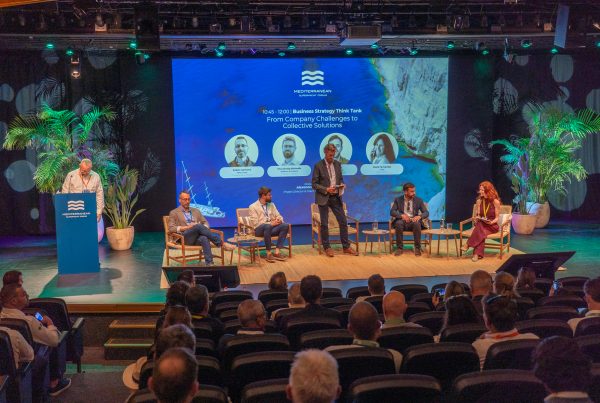
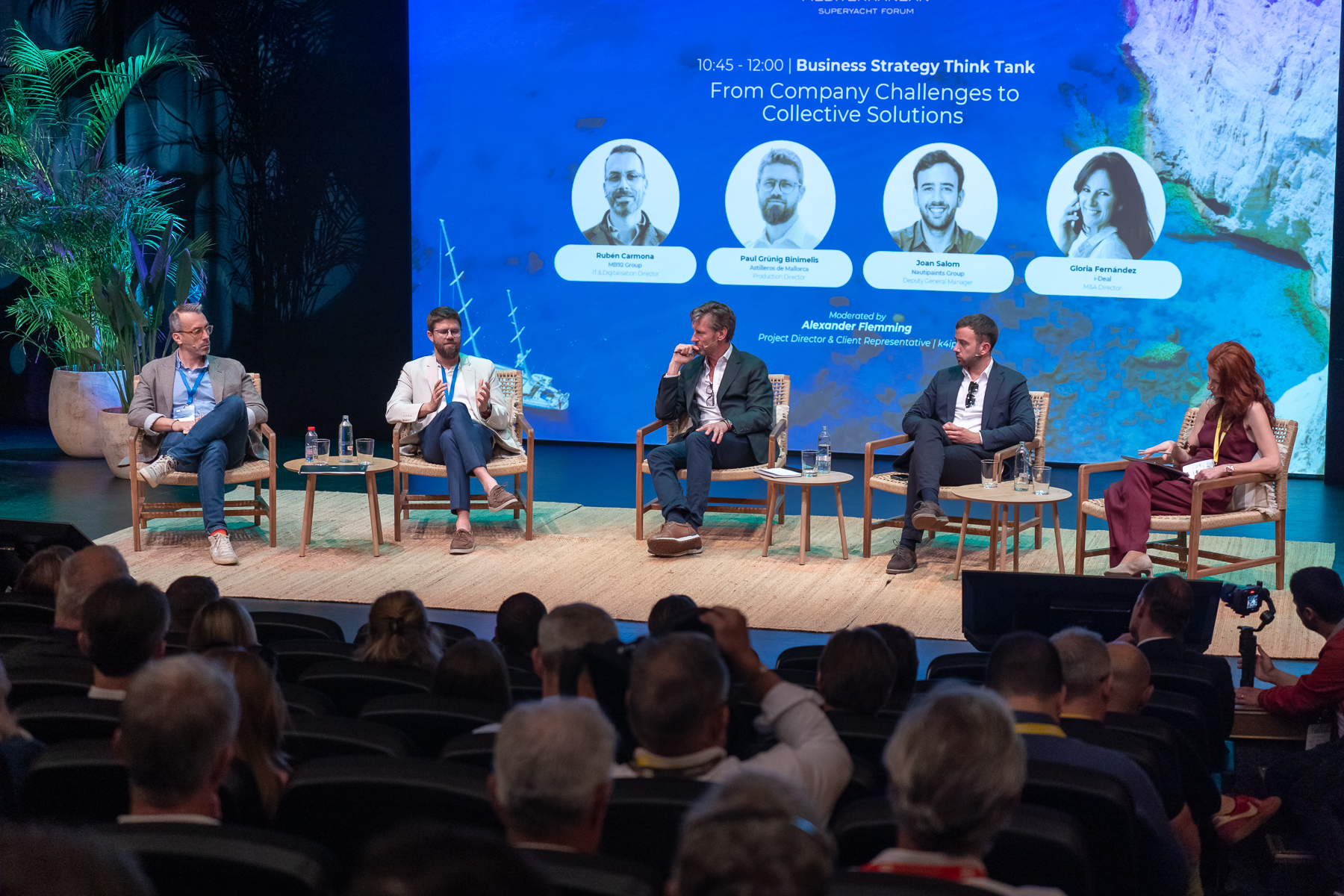
At the Mediterranean Superyacht Forum 2026, these challenges featured prominently in the Business Strategy discussions, particularly in the Small Group Sessions led by Gloria Fernández, M&A Director at i-Deal, and Joan Salom, Deputy General Manager at Nautipaints Group.
Their sessions explored different but closely connected questions: how investment can influence the future of yachting businesses, and how companies can build the structures needed to remain successful beyond their founders.
Together, these conversations highlighted a fundamental challenge for the sector: building businesses that are not only successful today, but prepared for the next generation.
When business success depends on individuals
Many companies in the Mediterranean yachting ecosystem have developed their competitive advantage through the expertise, reputation and relationships of their founders.
This entrepreneurial foundation has helped create highly specialised businesses with strong client loyalty and distinctive corporate cultures.
However, reliance on a founder or a small number of key professionals can also create long-term vulnerabilities.
When essential commercial relationships, operational decisions or technical knowledge remain concentrated in a few individuals, the business may face difficulties transferring leadership, attracting investment or maintaining continuity during periods of change.
As highlighted during MSF26, strong commercial performance does not automatically translate into a business that can scale or transition successfully.
The challenge is to transform individual expertise into organisational capability, without losing the relationships, flexibility and specialist knowledge that made the company successful.
Succession is a strategic process, not a single event
Succession planning is often associated with the moment a founder decides to retire or transfer ownership.
In practice, preparing a business for that transition requires a much broader approach.
Documented processes, delegated responsibilities, capable middle management and clear decision-making structures all contribute to ensuring that a company can operate effectively beyond its original leadership.
This process also involves preparing the next generation of professionals to assume greater responsibility.
For yachting businesses, where technical expertise and trusted relationships play such an important role, knowledge transfer is particularly valuable.
A successful succession is not simply about identifying who comes next. It is about ensuring that the organisation has the capabilities, leadership and systems needed to continue delivering value.
Capital as an accelerator of transformation
External investment can create opportunities for yachting companies seeking to expand, professionalise or prepare for ownership transitions.
Access to capital may support investments in infrastructure, technology, talent development, acquisitions or international growth.
It can also provide a potential route for founders looking to manage succession or restructure ownership.
However, the Business Strategy discussions at MSF26 highlighted an important distinction: capital should support the company’s strategy, rather than determine it.
Different investors bring different expectations regarding governance, reporting, performance and growth.
For companies considering external investment, alignment between the investor’s objectives and the business’s long-term vision is therefore essential.
Not every company needs external capital, and not every investment model is suitable for every business.
The strategic question is not simply whether capital is available, but whether it can create lasting value while preserving the company’s competitive strengths.
Why governance matters
As businesses grow or bring in new stakeholders, governance becomes increasingly important.
Clear responsibilities, transparent decision-making, financial oversight and consistent reporting can help companies manage complexity while maintaining accountability.
These structures are particularly relevant when ownership and management are no longer concentrated in the same individuals.
However, governance should not be confused with unnecessary bureaucracy.
For many specialist yachting companies, flexibility, responsiveness and personal commitment remain important advantages.
The objective is to establish structures that improve clarity and support strategic decisions without compromising the agility and culture of the business.
Good governance should make an organisation more resilient, not less entrepreneurial.
Preserving identity through change
One of the recurring themes across the MSF26 Business Strategy discussions was the need to preserve business identity during transformation.
The Mediterranean refit and yachting ecosystem has developed around companies whose value is closely linked to craftsmanship, technical specialisation, personal relationships and accumulated knowledge.
As these businesses evolve, they face the challenge of combining those traditional strengths with more structured management practices.
Professionalisation, investment and succession planning should therefore be seen as connected processes.
Together, they can help businesses move beyond dependence on particular individuals while protecting the expertise and culture that differentiate them.
The goal is not simply to create larger companies, but stronger organisations capable of sustaining their value over time.
From MSF26 to MSF27: building businesses for the next generation
The discussions at MSF26 demonstrated that the future of the Mediterranean superyacht industry will depend not only on market opportunities, but also on the ability of individual businesses to prepare for change.
For founders and management teams, this means asking difficult but necessary questions.
Is the business prepared for a leadership transition? Is its knowledge sufficiently shared? Are governance structures appropriate for its ambitions? Would external investment support its long-term strategy?
These questions are relevant whether a company is considering expansion, seeking investment, preparing a succession or simply strengthening its operational resilience.
As we look towards the Mediterranean Superyacht Forum 2027, the conversation remains open:
How can the yachting industry build businesses that are ready for new investment, new leadership and new generations without losing the identity that made them successful?
The future of the sector will depend not only on the businesses we build today, but on those we prepare to succeed tomorrow.
This article draws on the conclusions of the Business Strategy Think Tank at Mediterranean Superyacht Forum 2026, including the Small Group Sessions led by Gloria Fernández (i-Deal) and Joan Salom (Nautipaints Group).