How can successful refit and yachting companies grow without losing the culture, flexibility and expertise that made them successful in the first place?
This was one of the central questions explored during the Business Strategy Think Tank at the Mediterranean Superyacht Forum 2026.
As the Mediterranean superyacht industry continues to evolve, companies face growing pressure to strengthen their internal structures, attract and retain talent, embrace digitalisation and prepare for new forms of investment.
Yet professionalisation brings its own challenges. More structure can support growth, but excessive bureaucracy can undermine the agility, personal relationships and specialist knowledge that define many successful businesses in the sector.
The discussion at MSF26 highlighted a fundamental consideration: the challenge is not simply to grow, but to build companies capable of sustaining that growth without losing their identity.
From individual expertise to organisational strength
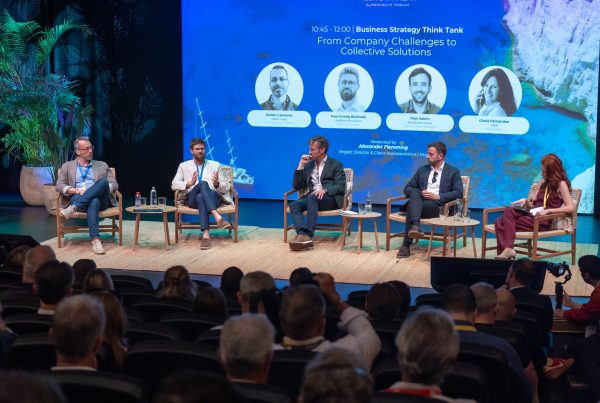
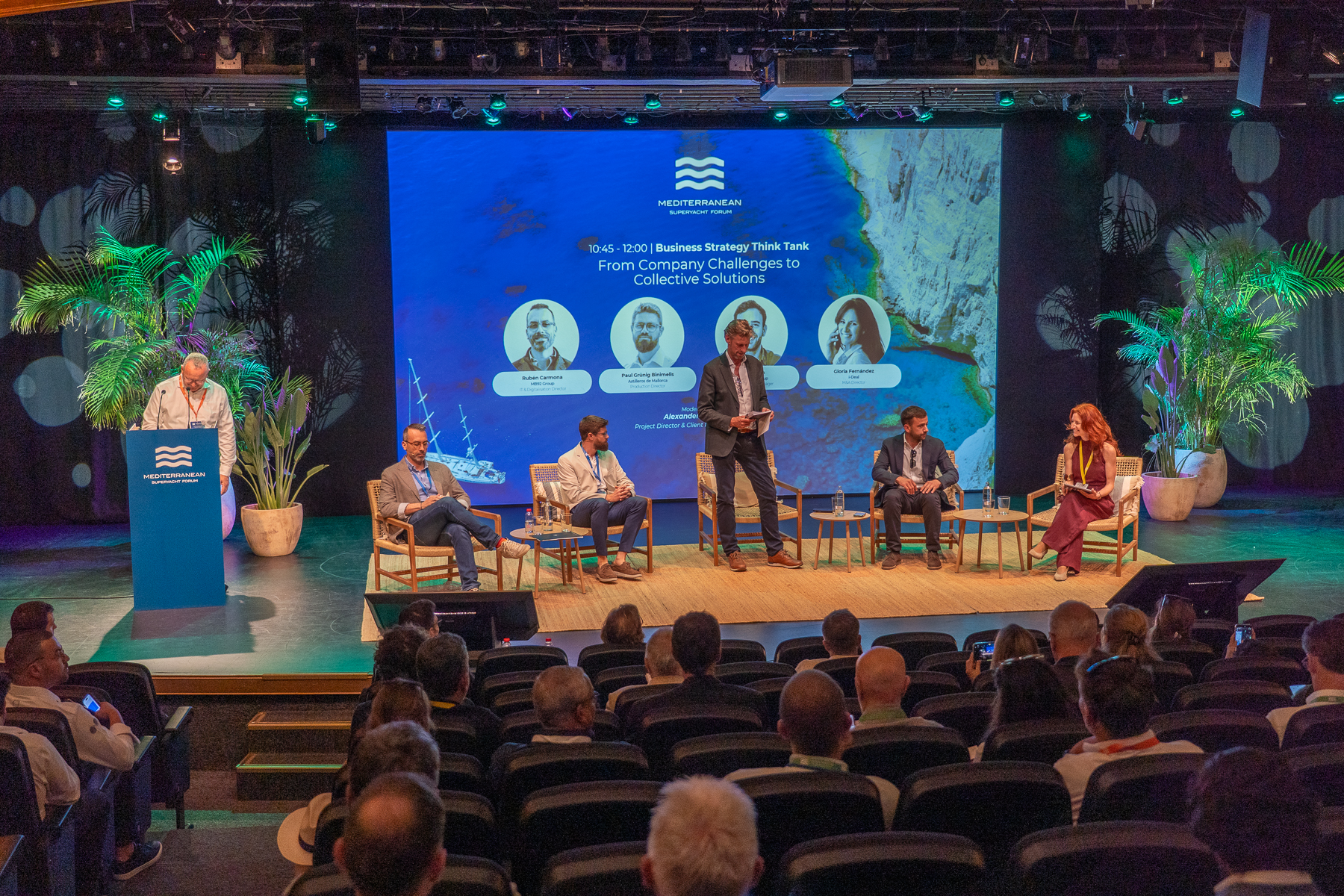
The Business Strategy Think Tank, moderated by Alexander Flemming (k4ip), brought together conclusions from four Small Group Sessions led by industry professionals:
- Rubén Carmona, MB92 Group — Building a Connected Digital Culture Across the Refit Ecosystem
- Paul Grünig, Astilleros de Mallorca — Scaling a Refit Business Based on Talent Management
- Joan Salom, Nautipaints Group — Building Refit Companies That Outlive Their Founders
- Gloria Fernández, i-Deal — Discovering How Capital Is Redefining the Future of Yachting
Although each session explored a different aspect of business development, a common challenge emerged: how to transform individual expertise into lasting organisational capability.
Many refit businesses have built strong reputations through technical excellence, close client relationships and the personal commitment of their founders or key professionals.
However, these same strengths can become vulnerabilities when critical knowledge, operational decisions and commercial relationships remain concentrated in a small number of individuals.
A successful business is not necessarily a scalable business.
For companies looking to expand, manage succession or attract investment, the ability to document processes, delegate responsibilities and develop internal leadership becomes increasingly important.
Professionalisation, in this context, is not about replacing personal expertise. It is about ensuring that expertise can be shared, developed and sustained over time.
Talent development must become a strategic priority
One of the clearest conclusions from the discussion was that talent remains a structural constraint on growth.
The superyacht refit sector relies on highly specialised skills, technical experience and coordination between different trades and disciplines.
Finding qualified professionals is a challenge, but recruitment alone is not enough.
Businesses also need systems capable of developing, retaining and transferring knowledge between generations of professionals.
Training, mentoring, middle management and internal career development should therefore be understood as strategic investments rather than simply operational costs.
Without these foundations, even companies experiencing strong demand may struggle to expand while maintaining quality and consistency.
The question is no longer only how to attract talent, but how to create organisations where talent can grow and contribute over the long term.
Digitalisation starts with culture, not technology
Digital transformation was another central theme.
While new platforms and tools can improve efficiency, transparency and project coordination, the Think Tank highlighted that digitalisation is fundamentally a cultural and organisational challenge.
The refit ecosystem involves multiple stakeholders, often working across different companies, departments and specialisations.
Improving collaboration requires more than introducing software. It requires clear processes, structured information, shared responsibilities and greater traceability.
Technology becomes valuable when it supports these objectives.
For companies seeking to professionalise, digitalisation should therefore be approached as an opportunity to improve how people work together, rather than simply automate existing practices.
The long-term objective is to build a more connected, transparent and collaborative refit ecosystem.
Capital can accelerate growth, but alignment matters
As the superyacht industry evolves, external investment is becoming an increasingly relevant consideration for companies exploring expansion, succession or business transformation.
Capital can provide resources to strengthen management structures, invest in technology, develop new capabilities or support international growth.
However, investment also introduces new expectations around governance, reporting, performance and decision-making.
The Business Strategy Think Tank emphasised that not every company requires external capital, and not every investment model is appropriate for every business.
The challenge is to identify whether an investment supports the company’s long-term ambitions, operating model and culture.
Financial growth should not come at the expense of the expertise, relationships and flexibility that underpin competitive advantage.
Capital should support business strategy, rather than define it.
Professionalisation without unnecessary complexity
Across the discussions, one conclusion was particularly relevant to the Mediterranean refit ecosystem: professionalisation should not mean abandoning the characteristics that have made companies successful.
Technical specialisation, personal commitment, flexibility and trusted relationships remain essential strengths.
The objective is to combine these qualities with stronger internal structures that support continuity, scalability and resilience.
This requires a balance between formal processes and entrepreneurial agility, between individual expertise and shared knowledge, and between growth ambitions and long-term sustainability.
Companies that achieve this balance will be better positioned to respond to evolving client expectations, changing market conditions and future business opportunities.
Continuing the conversation towards MSF27
The Business Strategy Think Tank at MSF26 demonstrated that many of the industry’s most important challenges are not external, but organisational.
Building stronger companies requires more than commercial success. It demands investment in people, clearer internal structures, effective knowledge transfer, responsible digitalisation and strategic decisions about capital.
As the Mediterranean Superyacht Forum looks towards MSF27, these conclusions raise a question for the wider industry:
How can refit and yachting companies become more structured, scalable and resilient while preserving the culture, expertise and human relationships that make them distinctive?
The conversation continues.
Insights drawn from the Business Strategy Think Tank at the Mediterranean Superyacht Forum 2026.